


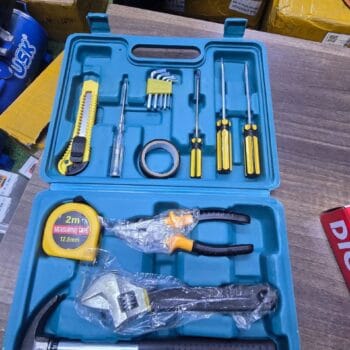
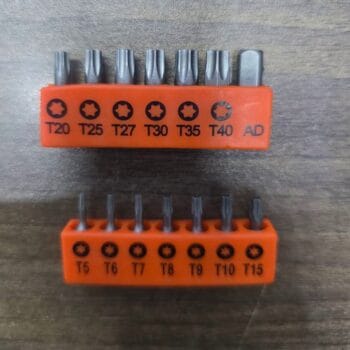
Broken Screw extractor with handle
KSh 750
What is a Screw Extractor?
A screw extractor is a specialized tool designed to remove damaged fasteners. They typically have a reverse (left-hand) thread or a tapered, fluted design that allows them to bite into the material of the broken screw. When turned counter-clockwise, they grip the screw and rotate it out.
Components of a Screw Extractor Set with Handle:
A typical set will include:
- Screw Extractors (the bits themselves): These come in various sizes to match different screw diameters. There are generally two main types:
- Spiral Flute Extractors (“Easy Outs”): These are tapered with a left-hand spiral flute. You drill a pilot hole into the broken screw, then tap the extractor into the hole and turn it counter-clockwise.
- Multi-Spline/Straight Flute Extractors: These have straight, aggressive splines that bite into the screw. They are often preferred for tougher, more stubborn fasteners.
- Drill-Out Extractors (Combination Bits): Some modern sets feature double-ended bits. One end is a drill bit (often left-hand spiral) to create the pilot hole, and the other end is the extractor to remove the screw.
- Handle (often a T-Handle or Tap Wrench): This is crucial for manually turning the extractors. The T-handle provides good leverage and control, allowing you to apply steady, counter-clockwise torque. For larger extractors, you might use an adjustable wrench or even a tap wrench. Some extractors are also designed to be used directly with a power drill set to reverse.
- Drill Bits (often included): To use many types of extractors, you first need to drill a pilot hole into the center of the broken screw. Sets often include correctly sized drill bits to match each extractor. These drill bits might be standard (right-hand cut) or, in more advanced sets, left-hand (reverse) drill bits which can sometimes start the extraction process even while drilling.
- Storage Case: A common feature for keeping the various sizes organized.
What is a Screw Extractor?
A screw extractor is a specialized tool designed to remove damaged fasteners. They typically have a reverse (left-hand) thread or a tapered, fluted design that allows them to bite into the material of the broken screw. When turned counter-clockwise, they grip the screw and rotate it out.
Components of a Screw Extractor Set with Handle:
A typical set will include:
- Screw Extractors (the bits themselves): These come in various sizes to match different screw diameters. There are generally two main types:
- Spiral Flute Extractors (“Easy Outs”): These are tapered with a left-hand spiral flute. You drill a pilot hole into the broken screw, then tap the extractor into the hole and turn it counter-clockwise.
- Multi-Spline/Straight Flute Extractors: These have straight, aggressive splines that bite into the screw. They are often preferred for tougher, more stubborn fasteners.
- Drill-Out Extractors (Combination Bits): Some modern sets feature double-ended bits. One end is a drill bit (often left-hand spiral) to create the pilot hole, and the other end is the extractor to remove the screw.
- Handle (often a T-Handle or Tap Wrench): This is crucial for manually turning the extractors. The T-handle provides good leverage and control, allowing you to apply steady, counter-clockwise torque. For larger extractors, you might use an adjustable wrench or even a tap wrench. Some extractors are also designed to be used directly with a power drill set to reverse.
- Drill Bits (often included): To use many types of extractors, you first need to drill a pilot hole into the center of the broken screw. Sets often include correctly sized drill bits to match each extractor. These drill bits might be standard (right-hand cut) or, in more advanced sets, left-hand (reverse) drill bits which can sometimes start the extraction process even while drilling.
- Storage Case: A common feature for keeping the various sizes organized.
| Weight | 1 kg |
|---|


Reviews
There are no reviews yet