


0%
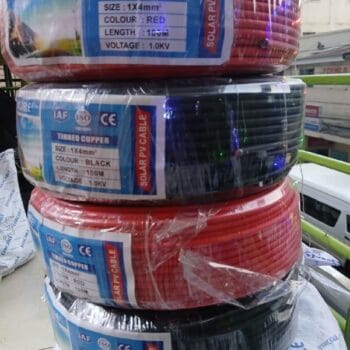
Quality Solar cables 4.0mm 1.0KV-Per Meter
KSh 120
- Voltage Rating: Solar cables are available in various voltage ratings. It’s essential to choose a cable with a voltage rating that exceeds the maximum system voltage to ensure safe operation.
- Insulation: The insulation material is crucial for protecting the conductors and preventing short circuits. Common insulation types include XLPE (cross-linked polyethylene) and PV1-F (photovoltaic grade).
- UV Resistance: The insulation should be resistant to ultraviolet radiation from the sun to prevent degradation and cracking over time.
- Temperature Range: Solar cables need to operate reliably in a wide temperature range, from freezing conditions to hot summer days.
- Flexibility: Flexibility is important for easy installation, especially in tight spaces or when routing cables around obstacles.
Description
Absolutely! Here’s a breakdown of solar cables with a 4.0mm cross-section and a length of 100 meters:
What they are:
- Solar Cables: These are specialized cables designed to handle the direct current (DC) power generated by solar panels. They’re built to withstand harsh outdoor conditions, including UV radiation, temperature fluctuations, and moisture.
- 4.0mm Cross-Section: This refers to the cable’s thickness, specifically the area of the copper conductor inside. A larger cross-section means lower resistance and the ability to carry more current.
- 100m Length: This is the total length of the cable, typically supplied in a single reel for convenient installation.
Key Features and Considerations:
- Current Capacity: A 4.0mm² solar cable can typically handle currents in the range of 20-30 amps, depending on the specific cable type and ambient temperature.
- Voltage Rating: Solar cables are available in various voltage ratings. It’s essential to choose a cable with a voltage rating that exceeds the maximum system voltage to ensure safe operation.
- Insulation: The insulation material is crucial for protecting the conductors and preventing short circuits. Common insulation types include XLPE (cross-linked polyethylene) and PV1-F (photovoltaic grade).
- UV Resistance: The insulation should be resistant to ultraviolet radiation from the sun to prevent degradation and cracking over time.
- Temperature Range: Solar cables need to operate reliably in a wide temperature range, from freezing conditions to hot summer days.
- Flexibility: Flexibility is important for easy installation, especially in tight spaces or when routing cables around obstacles.
Applications:
- Connecting solar panels to inverters: This is the primary use case for solar cables. They transfer the DC power generated by the panels to the inverter, which converts it to AC power for use in your home or grid connection.
- Extending solar panel arrays: If your solar panels are located some distance from your inverter, you’ll need longer cables to connect them.
Reviews (0)


Reviews
There are no reviews yet